

Getting into a soccer academy is rarely about finding one perfect tryout or saying the right thing in a first conversation. For most families, it is a process of finding the right environment, understanding what that environment expects and helping a player show up prepared to learn. The earlier that process becomes clear, the less likely a family is to make a rushed decision based on a name, a highlight reel or one intense training session.
A good academy fit should challenge a player without asking school, health or family life to become an afterthought. This guide walks through the practical steps, from deciding whether an academy makes sense now to preparing for a visit, assessment or tryout. It also helps parents recognize the questions that deserve a clear answer before anyone commits.
1. Start with a clear reason for exploring an academy
Before contacting programs, name the change you hope the player will experience. “Getting better at soccer” is a reasonable starting point, but it is too broad to guide a decision. A more useful goal might be improving comfort on the ball under pressure, learning a new position, receiving more detailed feedback, developing better training habits or finding a school routine that leaves room for both soccer and recovery.
Keep the horizon realistic. Think about the next six to twelve months rather than trying to map an entire playing career. A player can make meaningful progress in that window, but no responsible program can guarantee a college scholarship, professional contract or immediate place on a senior team. The right academy should be comfortable talking about the work a player can control and the opportunities they may earn over time.
This conversation is especially useful when family members see the player differently. Let the player describe what they enjoy, what feels difficult and what they want to improve. Parents can add the practical picture, including school, travel and wellbeing. The result is a more honest starting point than choosing a program solely because friends play there or because it sounds more advanced.

2. Learn what the program actually is
The word “academy” can describe very different experiences. It may mean a club pathway, a training program, a school that combines classes and soccer, a residential program or a team structure within a larger organization. That is why families should compare the day-to-day experience rather than assuming two academies offer the same thing.
Ask where the player will spend most of the day, who is responsible for soccer development and what the weekly rhythm includes. A training-only option can work well when a player already has a strong school and home routine. A school-based academy can be a better fit when academics, training, strength work and support need to operate as one coordinated plan. Our guide to what a soccer academy is can help families sort through those differences before they compare individual programs.
The same applies to pathway language. A real pathway is not just a list of future destinations. It explains what the player can do now, which standards matter next and how staff help them prepare. Ask about coaching, feedback, competition, academic support and realistic next steps before attaching too much weight to a logo or a promise.
3. Narrow the list before you ask for a tryout
A shorter, more thoughtful list makes every conversation better. Begin with practical fit: location, school grade, transportation, cost, training schedule and the player's current stage. Then look at the environment. Does the program explain how it develops individuals? Does it show who the coaches are? Can a parent see how school, training and recovery fit together?
Review the public information, but do not mistake polished marketing for a full answer. Make a list of questions that the website does not answer. You may want to ask about a normal week, who provides individual feedback, how staff communicate with families, what happens after an injury and whether a player can visit before any formal assessment.
For families considering Florida programs, our guide to choosing a soccer academy in Florida includes a useful comparison framework. It is designed to keep the discussion on the things that matter after the first impression fades: coaching, academics, routine, culture and honest opportunities.
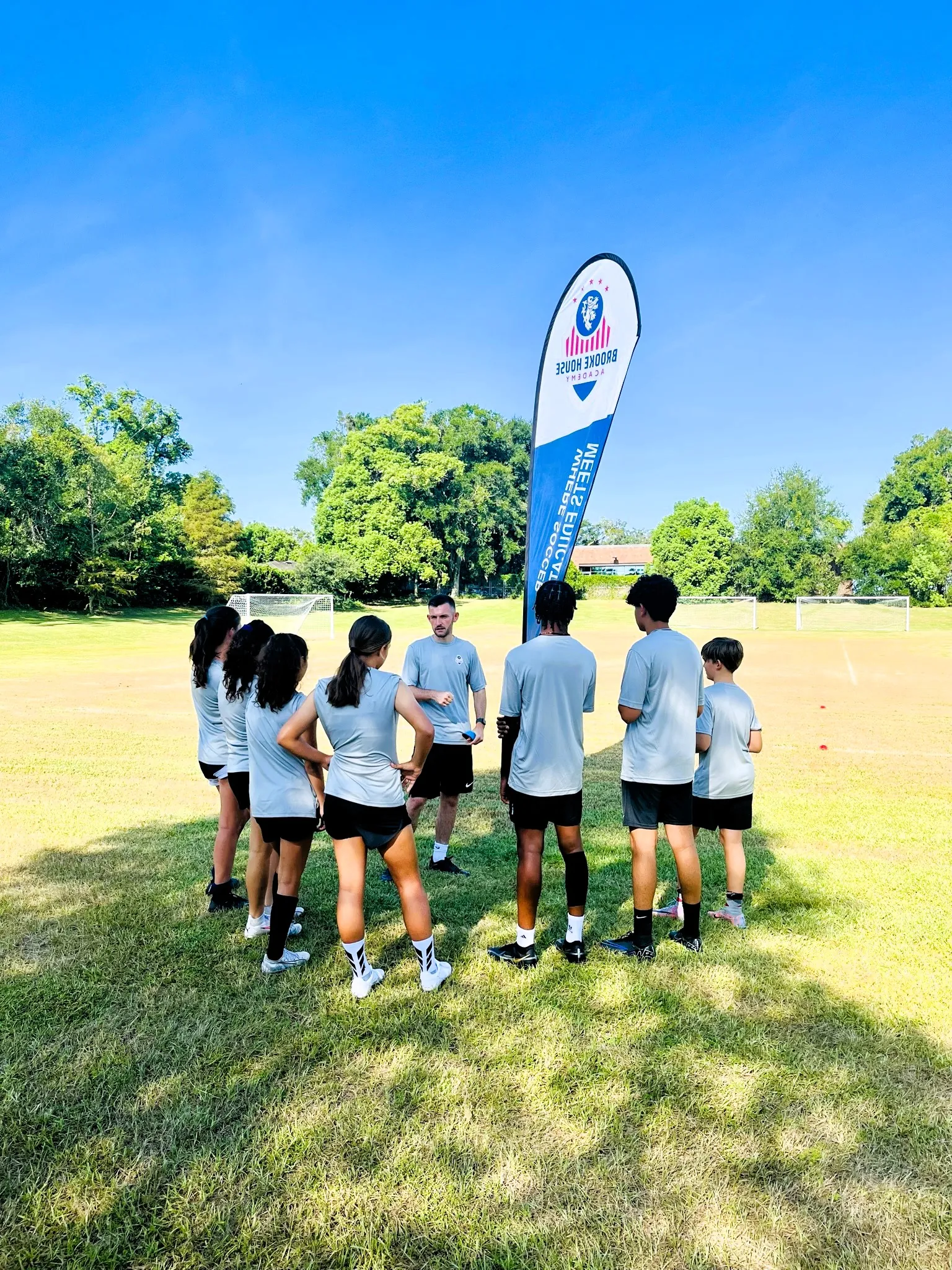
4. Put academics and the weekly routine in the same conversation
School-age players do not benefit from an academy choice that works only when life is easy. Ask to see a normal week, including class time, training, travel, strength work, meals, recovery and independent schoolwork. The details will vary by age and program, but the staff should be able to explain how the pieces fit together without treating academics as a separate problem for the family to solve.
This matters for more than grades. A workable academic routine supports confidence, long-term options and a player's ability to manage responsibility. Families who may consider college soccer later should understand that athletic ambition and academic planning travel together. The NCAA's initial-eligibility guidance makes clear that students need to meet academic requirements as part of that future pathway.
Ask direct questions: Who helps when a student falls behind? What changes during tournament weeks? How are travel and missed work handled? What does recovery look like after a demanding stretch? Brooke House Academy families can review the academic approach, example daily schedules and the school calendar before scheduling a conversation.
5. Prepare for the first conversation
The first call, email or visit does not need to feel like an interview. Its job is to help both sides decide whether a next step makes sense. Share the player's age, current team or playing background, goals and any practical needs the family already knows about. Be direct about the kind of environment you are trying to find.
Let the player take part in the conversation when appropriate. Coaches can learn more from a young person who can describe a recent challenge, ask a thoughtful question or explain what they want to work on than from a perfectly polished answer delivered by someone else. Parents can help without taking over the entire exchange.
Use the conversation to understand the program's process. Ask whether the next step is a campus visit, a training observation, a tryout, an academic review or a soccer assessment. Ask what documents or equipment are needed and whether there is a timeline for decisions. Clear communication at this stage is a useful preview of how the relationship may work later.

6. Treat a tryout or assessment as a two-way evaluation
Players often arrive at a tryout believing they must prove everything in one session. Coaches are looking for more than a finished product. Technical ability matters, but so do listening, effort, communication, awareness, response to feedback and the way a player handles a mistake. A player who resets quickly and stays engaged can show real potential, even on a day when every touch is not perfect.
Preparation should be simple. Get enough sleep, eat normally, arrive early, bring the required equipment and know where you are going. Encourage the player to focus on their habits: scan the field, communicate, compete respectfully and take instruction. Trying to force a highlight moment can distract from the qualities that make someone coachable over time.
Families should use the visit as an evaluation too. Watch how coaches speak to players, how students move through the day and whether the environment feels organized. Notice whether questions receive a clear answer. A serious program can set high standards while still treating young people with patience and respect.
7. Ask what happens after the assessment
A useful admissions process explains what comes next, whether the answer is yes, not yet or not the right fit. If a program offers a place, ask about the first few weeks, communication expectations, paperwork, equipment, transportation and how staff help a new player settle in. A clear onboarding plan can reduce anxiety for both the player and the family.
If a player is not accepted immediately, ask for specific feedback when it is available. “Not ready” is far more useful when it is connected to a next action, such as gaining confidence in a competitive environment, improving fitness habits or returning for a later observation. The goal is not to turn every rejection into a promise. It is to leave with a constructive picture of the next development step.
Keep perspective. A decision from one academy does not define a player's ceiling. Young people develop at different rates, and the right next environment can change as their confidence, physical maturity and goals change. The best choice is the one that gives the player a sustainable place to learn, compete and keep moving forward.
Use a simple family checklist before deciding
Before accepting a place, take a quiet moment to compare the answers you received with the goals you set at the beginning. A good decision does not require every detail to be perfect, but the important parts should be clear. The player should understand what the next step asks of them. Parents should understand the commitment of time, travel and schoolwork. Staff should be able to explain how development is supported when progress is uneven.
It helps to write down the answers while they are fresh. Separate the things you saw from the things you were told. Did you see coaches give clear instruction? Did you see students moving through a normal school day? Did staff explain how the player would receive feedback? Those observations are more useful than a general feeling that a program seemed impressive.
- Player fit: Does the player feel challenged, welcomed and ready for this environment?
- Coaching: Can staff explain how individual feedback and development plans work?
- School: Is there a credible plan for coursework, support and busy weeks?
- Routine: Does the weekly rhythm leave room for sleep, recovery and family life?
- Communication: Do parents and players know who to contact when questions arise?
- Next steps: Are opportunities explained honestly, with clear standards rather than guarantees?
Give the player room to be part of the final discussion. They do not carry the full weight of the decision, but their experience matters. A young person who feels heard is more likely to ask questions, take ownership of their routine and stay engaged when the work becomes difficult. The best academy choice builds both soccer ability and the habits that help a student-athlete grow beyond the field.
How Brooke House Academy can help
Brooke House Academy brings academics, soccer development, strength and conditioning and personal growth into one school-day setting for student-athletes in grades 6-12. Families can begin with a campus conversation, then learn whether a visit, soccer assessment and student interview make sense for their child. The focus is on finding a genuine fit, not asking families to make a decision without seeing the environment.
To explore the complete experience, review the football pathways, meet the coaching team, see the Florida campus options and learn how the Academy connects with Brooke House FC senior teams. When your family is ready, book a tour or ask a question.
Frequently asked questions
What age can a player join a soccer academy?
It depends on the program. Some academies serve younger club players, while school-based academies usually work with a defined grade range. Ask about the player's age, current development stage and whether the daily routine is appropriate for both soccer and school.
Do players need to attend a tryout to join a soccer academy?
Many programs use a tryout, training observation, assessment or conversation before offering a place. The goal should be to understand fit, not to create a one-day verdict. Ask what staff are looking for and whether they consider attitude, learning habits and readiness alongside current ability.
What should a player bring to a soccer academy tryout?
Bring the required soccer equipment, water and any requested paperwork. More importantly, arrive rested, on time and ready to listen. A player does not need to perform every action perfectly. Coaches can learn a lot from effort, communication, response to feedback and willingness to compete.
Should families discuss academics before joining a soccer academy?
Yes. Ask how schoolwork, travel, training, recovery and support work in a normal week. Student-athletes need an academic plan that remains credible even when soccer gets busy, especially if college remains a future possibility.
Continue your research.

What Is a Soccer Academy? A Parent’s Guide
Learn what a soccer academy is, how it works, how it compares with club soccer, and what parents should look for in a player-development program.
Read the guide →
How to Choose a Soccer Academy in Florida
A parent checklist for comparing Florida soccer academies, from coaching and academics to daily routines and next-step opportunities.
Read the guide →