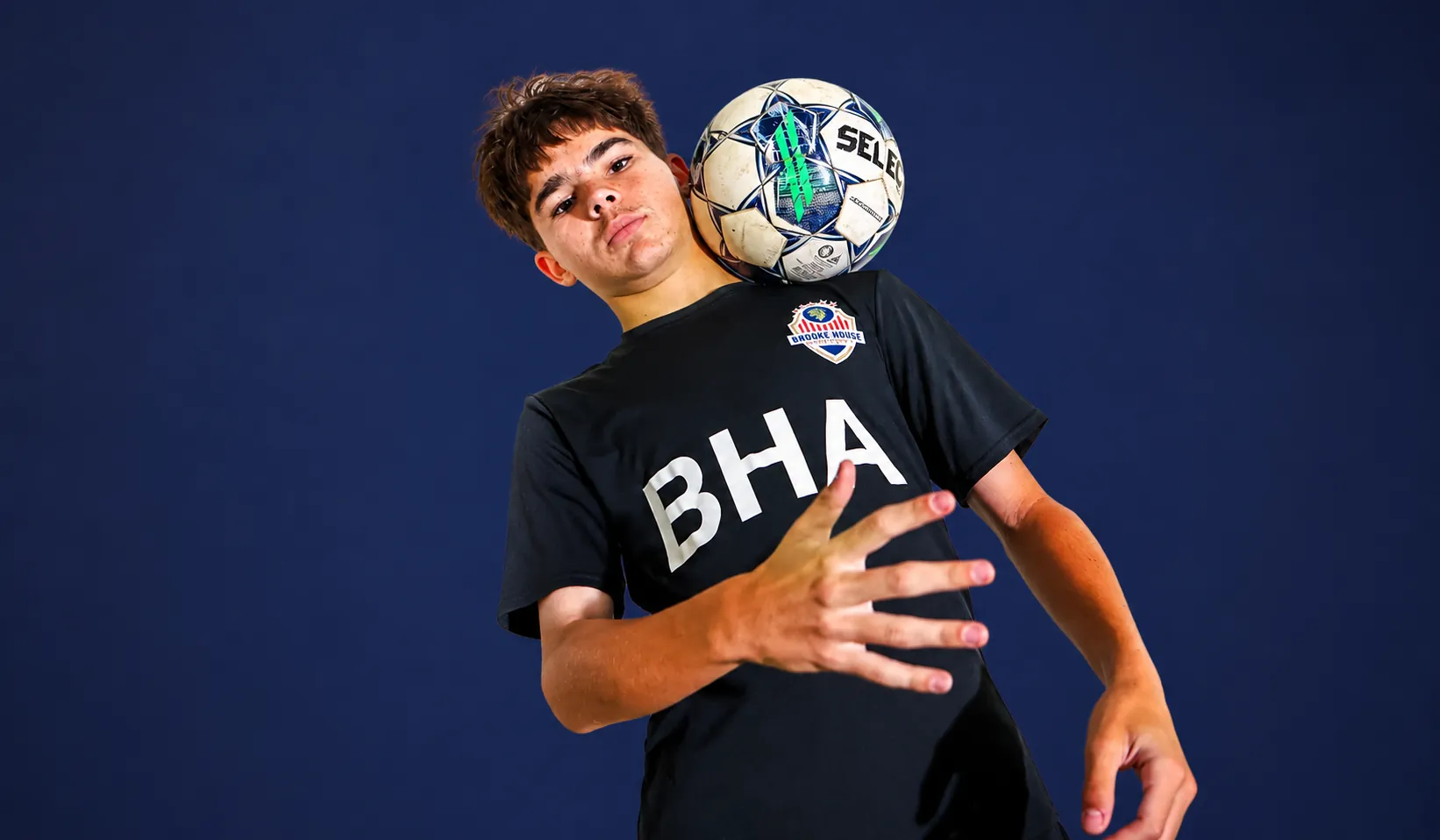
A professional approach to development
Train with purpose, understand your game and build the habits that support lasting progress. Brooke House Academy combines daily soccer development with education, giving student-athletes a structured environment to work on their ambitions without leaving the classroom behind.
Our program brings together technical ability, tactical understanding, physical preparation and mental development. UEFA and USSF licensed coaches with professional and collegiate experience guide a curriculum that treats the player as a whole person, not simply a position on the field.
The goal is meaningful improvement and preparation for the next appropriate opportunity. College soccer, professional football and international experiences are possible directions, but every player’s route depends on their development, readiness and individual circumstances.
Your individual learning plan
No two players arrive with the same strengths, experience or goals. Each student-athlete receives an Individualized Learning Plan, or ILP, connecting soccer development with academic progress.
An initial assessment considers technical, tactical, physical and psychological development. Coaches use that starting point to identify priorities and shape a training roadmap. Position-specific coaching, targeted skill work and a personalized fitness plan help players focus on what matters for their game.
Progress is reviewed through coaching feedback, video, GPS information and performance analysis. The plan can evolve as the player develops, rather than remaining a fixed checklist for the entire year. Individual meetings with coaches and advisors also support conversations about recruitment, scholarships and future opportunities.
Technical skills. Better decisions.
Main field sessions connect individual technique with the demands of playing in a team. Small-sided games, positional drills and passing patterns give players opportunities to apply skills in situations where timing, movement and decisions matter.
- Technical development: targeted skill drills and position-specific work shaped around the individual player.
- Tactical understanding: attacking and defensive principles, transition play and team cohesion.
- Game intelligence: reading positioning and movement, reviewing decisions and understanding how to contribute within a team.
- Goalkeeper development: specialist coaching focused on shot-stopping, distribution and positioning.
Workshops and classroom discussions extend that learning beyond the field, covering tactical analysis, leadership, nutrition, mental performance and career pathways.
A week with a purpose
Training is organized around development, match preparation and recovery. The weekly rhythm balances demanding sessions with time to review performance and prepare for the next game.
Monday
Individual reviews, post-game recovery and ILP-focused work. Recovery activities may include core work, yoga, activation and injury-prevention exercises.
Tuesday
Readiness checks, strength programming and a main-curriculum outfield session.
Wednesday
A development workshop, plyometrics or running mechanics, plus main-curriculum outfield training.
Thursday
Readiness checks, strength programming and another main-curriculum outfield session.
Friday
Individual reviews, ILP priorities and pre-game preparation, with intensity managed ahead of competition.
Schedules vary by campus and are subject to change. Match timing, the stage of the season and player needs influence the final plan. Pool-based activities are available where campus facilities support them.
Make progress visible
Players need more than encouragement to understand their development. VEO video analysis and PlayerData GPS tracking give coaches and student-athletes information they can use in training, reviews and individual plans.
VEO video analysis
Selected sessions are analyzed through video to review positioning, movement and decision-making. Seeing an action again helps a player connect coaching feedback with what actually happened on the field.
PlayerData performance tracking
GPS information includes distance covered, high-intensity sprints, speed and acceleration. Workload and fitness information, alongside gym performance tracking, helps the team understand training demands and monitor development over time.
These tools support coaching judgment. Players learn to interpret their performances and identify useful next steps, rather than treating one number as the complete picture of their ability.
Strength, recovery and readiness
Physical development is planned around the athlete and their position. Strength and conditioning work targets speed, agility, endurance and power, with the emphasis adjusted across the season.
The annual August pre-season camp focuses on fitness and team building. During the school year, readiness checks and workload management help shape training. Pre-match sessions emphasize tactical preparation, set pieces and lighter technical work; post-match sessions focus on recovery and performance review.
Recovery and injury-prevention work are part of the program, alongside support with rehabilitation needs. Campus facilities differ, so recovery activities are adapted to the location and the player. Nutrition guidance helps student-athletes understand fueling, recovery and the daily habits that support training.
Mental development matters too. Sports psychology, leadership workshops and mental-performance work focus on confidence, resilience and decision-making under pressure.
The people behind the player
Player development draws on more than one coaching discipline. The program brings together technical coaches, strength and conditioning specialists, performance analysts, sports science, goalkeeper coaching, nutrition and mental-performance support.
Our global football network includes Micky Adams as Global Technical Director, Roy Carroll as Global Goalkeeping Consultant and Mike Edwards as Global Performance Consultant. Their professional experience supports the academy’s approach, alongside opportunities to learn from visiting coaches.
Families can meet the academy team and discuss the coaching support and training arrangements at their chosen campus.
Education and your next step
Soccer sits within the school day, alongside Florida Virtual School coursework and on-site academic support. Individual plans help student-athletes manage their academic responsibilities while committing to training and development.
As players look ahead, coaches and advisors help them understand college recruitment, scholarship opportunities and professional trials. Brooke House’s wider network includes college progression, USL opportunities and overseas routes, as well as UK training, exchange and tournament experiences through Brooke House College.
These are opportunities to explore, not guaranteed destinations. A campus visit is the best starting point for discussing your child’s playing background, academic needs and the environment that will help them develop.