

The dream of playing professional soccer can give a young player real motivation. It can also make every team, tournament and decision feel urgent. For families, the healthiest approach is not to promise an outcome that no one can guarantee. It is to build the environment, habits and choices that help a player develop well, stay ready for opportunity and carry valuable skills forward whatever the game brings.
There is no single route to the professional game in the United States. Players develop at different rates, and opportunities can arrive through school, clubs, academies, college, pre-professional teams and senior environments. This guide gives young players and their families a realistic way to think about that journey: focus on the work in front of you, choose the right next environment and keep education central.
Start with a realistic definition of the goal
Becoming a professional player means earning the chance to compete in a paid senior environment. It is a demanding goal, and the route is not a straight ladder. Some players develop early, while others need more time physically, technically or tactically. A player can also change position, find a better coaching fit or make a major step after a period that looked quiet from the outside.
That uncertainty is not a reason to lower standards. It is a reason to use better ones. Instead of asking whether a twelve-year-old is already "on track" to become a professional, ask whether they are learning, enjoying the game, responding to coaching and becoming more capable over a season. Those questions lead to better decisions than a search for a guarantee.
U.S. Soccer's Pathways Strategy recognizes that families often find the game difficult to navigate. Its player-first approach is a useful reminder: the next step should fit the player's present needs, not just look impressive on a résumé.

Build the four parts of a player's game
Technical skill matters, but it is only one part of long-term development. A player needs a reliable first touch, passing range, ball protection and the confidence to receive the ball under pressure. Those skills become more useful when the player can scan early, recognize space and make a decision quickly. Training should create plenty of moments to practice those actions, not just drills that look neat.
Game understanding grows through playing, watching and reflecting. Encourage players to notice what happens before they receive the ball: where teammates are, which passing lane is open and what changes when possession turns over. A player who can explain one good decision and one moment they would replay is learning how to learn, not just waiting to be told the answer.
Physical preparation should be age-appropriate and guided by qualified adults. Speed, strength, coordination and durability help players meet the game's demands, but recovery matters just as much. Sleep, regular meals and sensible workload choices are not extras. They make it more likely a young athlete can train with attention, recover from setbacks and stay available through a long season.
The fourth piece is character. U.S. Soccer's explanation of talent identification describes evaluation that includes game understanding, technical and physical execution, responsibility, initiative, learning ability and a growth mindset. Families can use the same lens. How does the player respond after a mistake? Do they listen, compete, communicate and stay engaged when the game is hard?
Choose the environment, not the label
A famous name, a busy match calendar or a polished social feed cannot tell a family whether a program is right for their player. Look at the weekly experience. Are coaching expectations clear? Is there enough meaningful competition? Do players receive specific feedback? Is the staff able to explain how a player progresses when development is uneven?
A strong environment also protects the player as a person. The right program has standards, but it does not make a young athlete feel that every touch determines their future. Players need room to take responsibility, make mistakes and improve. The Academy's guide to what a soccer academy is can help families distinguish between the labels and the day-to-day support behind them.
Ask to see a normal week before making a decision. Include school hours, training, matches, travel, strength work, recovery and the time available for homework. A schedule that looks ambitious but leaves no room for school or sleep is not a complete development plan. The best fit is one a player can sustain long enough to grow.
Keep school in the plan
Education is not a backup plan that begins only if soccer changes. It is part of a player's confidence, options and daily discipline. School teaches players how to organize time, communicate with adults, recover from a difficult week and keep a broader view of their future. Those qualities travel well into every level of the game.
College can also remain a meaningful route for players who want to continue developing while earning a degree. The right choice depends on the player, the program and the opportunities available at the time. The NCAA's initial-eligibility guidance is a sensible place for families to understand how academic preparation protects future options.
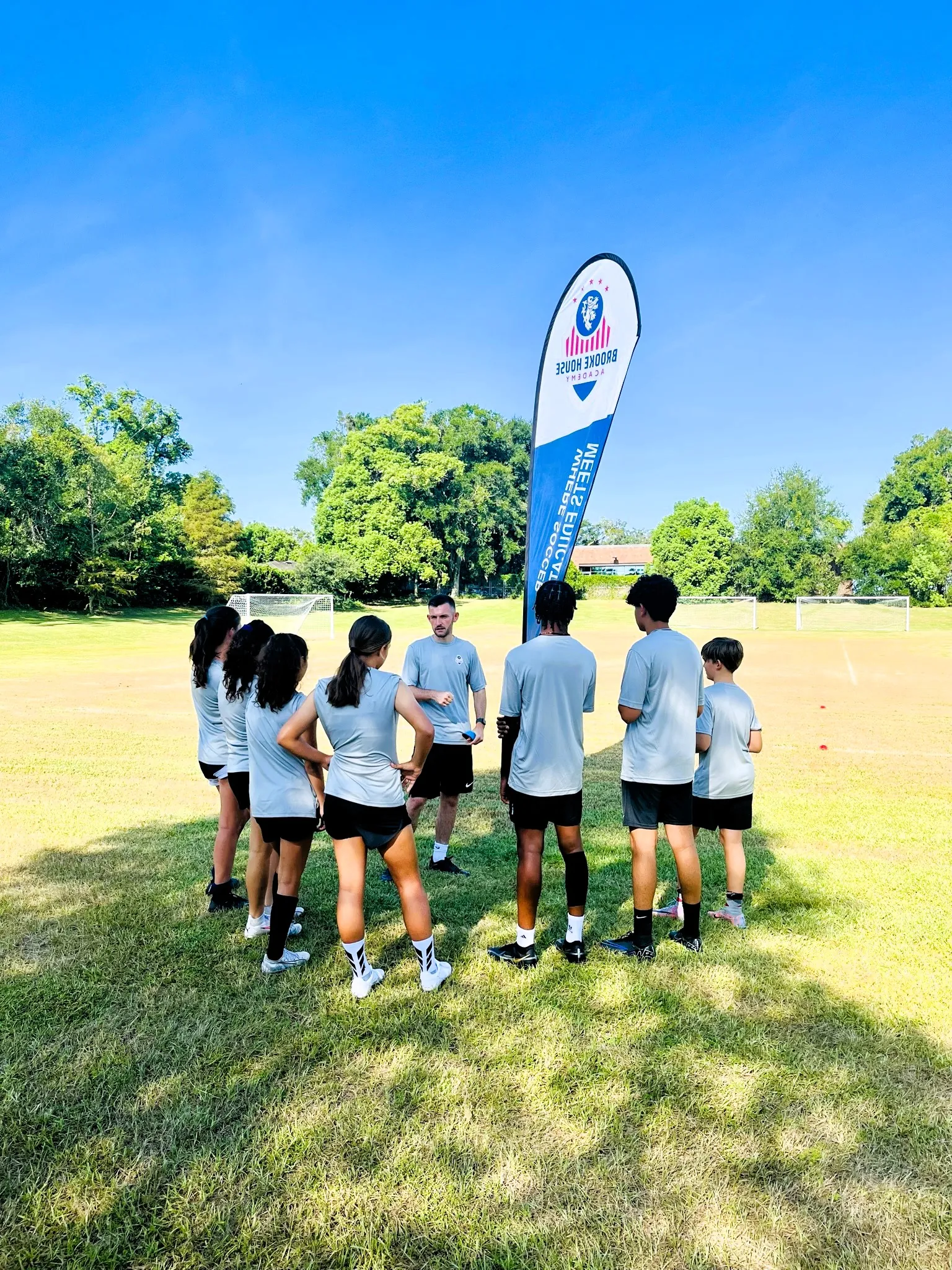
Put schoolwork on the same calendar as training and matches. When a tournament or travel day approaches, students should identify the likely pressure points, begin obvious work early and communicate with teachers before they are behind. Brooke House Academy's daily schedule and academic approach show the kind of joined-up plan families should be able to ask for from any student-athlete environment.
Seek feedback and make it actionable
Players improve faster when feedback becomes a clear next action. "Work harder" is not enough. Useful feedback identifies the moment, the decision and the practice: scan before receiving, recover more quickly after losing the ball, use the weaker foot in a particular pattern, or communicate earlier with a teammate. A player should leave a conversation knowing what to work on this week.
Encourage players to ask coaches two simple questions: What did I do well today? What is one thing I can improve before our next session? Then help them keep the answer small enough to act on. One thoughtful target at training is more valuable than a long, anxious list of flaws.
Video can help when it is used to learn rather than perform. A player might review a few clips with a coach, notice their starting position or identify what they missed before receiving the ball. Highlights can be useful later, but the daily purpose of video should be clearer decisions, not a constant audition.
Turn ambition into a 90-day plan
Big goals become more useful when they are translated into a short period of honest work. A player might choose one technical focus, one game-understanding focus and one routine focus for the next three months. For example: receive on the back foot more often, scan before the ball arrives and prepare school and training gear the night before. These are visible actions, not promises about where the player will be in five years.
Put a simple review date on the calendar. At the end of each month, ask what has improved, what still feels difficult and what feedback a coach would add. If the player has worked consistently but the goal is too broad, make the next version smaller. That is not lowering ambition. It is how serious players learn to direct effort without burning themselves out.
A family can keep the conversation practical by looking for evidence rather than drama. Has the player become more reliable at training? Do they understand a tactical instruction more quickly? Are they communicating better, sleeping enough and staying on top of school? Progress in these areas gives a player a base they can carry into a tougher team, a new position or an unexpected opportunity.
Keep the plan visible, but do not make it another source of pressure. A note on the refrigerator, a shared calendar or a short Sunday conversation is enough. The player should know the focus before a session, while parents should know when to step back and let the player own the work. If an injury, academic deadline or family change disrupts the plan, adjust it without turning a temporary setback into a verdict on the player's potential. Long-term development needs patience as much as effort.

Look for meaningful exposure, not noise
Being seen matters, but no single showcase, trial or social-media post decides a player's future. Good exposure follows good development. It comes from competing in appropriate environments, being prepared when opportunities arrive and building relationships through consistent conduct over time.
U.S. Soccer describes Talent Identification Centers as single-day opportunities that help identify and evaluate players in a challenging setting. They are not a shortcut. They sit within a broader process of observation and development. Families should treat every opportunity the same way: prepare well, play honestly, learn from the experience and return to the work that will matter next week.
The same is true of a player profile or highlight video. Keep it accurate, organized and current, but do not let it replace training, school or relationships with coaches. A dependable player who learns quickly and contributes to a team gives people a reason to keep watching.
What a healthy family role looks like
Parents can create the conditions for progress without carrying the dream for the player. Make routines easier: protect sleep, help with transportation planning, keep a clear calendar and create space for calm conversation after games. Let the player speak with coaches when appropriate, reflect on their own work and take ownership of the next task.
Avoid turning every match into a career verdict. Ask what the player learned, what they enjoyed and what they want to try next. If there is a real concern about fit, workload or communication, address it directly with the program. The goal is a family environment where ambition and well-being can sit next to each other.
How Brooke House Academy can help
Brooke House Academy brings academics, soccer development, strength and conditioning and personal growth into one school-day environment for student-athletes in grades 6 through 12. The Academy connects that daily work to a wider picture of pathways, including Brooke House FC's senior men's and women's teams, while staying focused on the individual player in front of us.
Families can explore the football pathways, meet the coaching team and learn how Brooke House connects with Brooke House FC. When a campus visit feels like the right next step, book a tour or ask a question.
Frequently asked questions
What age do professional soccer players start training seriously?
There is no single age or timetable. Young players benefit most from a strong foundation of enjoyment, skill, game understanding and healthy habits. As they grow, the right level of competition and coaching matters more than rushing to imitate an adult professional schedule.
Do players need to attend a soccer academy to become professional?
No single environment guarantees a professional future. The useful question is whether an academy, club, school or team gives the player quality coaching, meaningful competition, honest feedback and a routine that supports development over time.
Can college soccer still be part of a professional pathway?
Yes. College soccer can be one of several routes a player explores, alongside academy, pre-professional and senior-team opportunities. Families should protect academic options and choose an environment that keeps the player improving, visible and prepared for the next appropriate step.
What should a player focus on first?
Focus first on the daily habits a player controls: learning from coaching, playing with courage, taking care of recovery, staying organized at school and becoming a dependable teammate. Those habits create a stronger base than chasing one showcase or trying to predict a career too early.
Keep building the right foundation.
What Is a Soccer Academy? A Parent’s Guide
Learn what a soccer academy is, how it works, how it compares with club soccer, and what parents should look for in a player-development program.
Read the guide →
How to Get Into a Soccer Academy: A Parent Guide
A practical guide to preparing for a soccer academy, from goals and research to tryouts, school planning and the first family conversation.
Read the guide →
Soccer Academy Tryouts: A Parent Guide
What soccer academy tryouts involve, what coaches look for, and how families can prepare without adding unnecessary pressure.
Read the guide →